
AI visibility for engineering companies
Tips and insights from an engineer
Yeah, that’s right, I’m an engineer… at least I used to be. Though I’ve been told many times: “once an engineer, always an engineer”. I suppose at some level that’s true. I certainly mostly still think like an engineer, for better AND for worse 😊.
 David LaVine, Engineering Marketing Consultant & Founder, RocLogic Marketing (BSEE, MSECE)
Last updated: August 11th, 2026
First off: take whatever you learn about AI visibility with a block (that’s many grains 😏) of salt, including this article! This is an unsolved, complex, volatile, and quickly evolving subject!
Interested in showing up in ChatGPT? Google’s AI overviews? Claude? Perplexity?
Then buckle up. As of mid 2026, this is the bumpiest ride at the park.
AI visibility – Does it matter yet?
Definitely.
Why?
Three reasons:
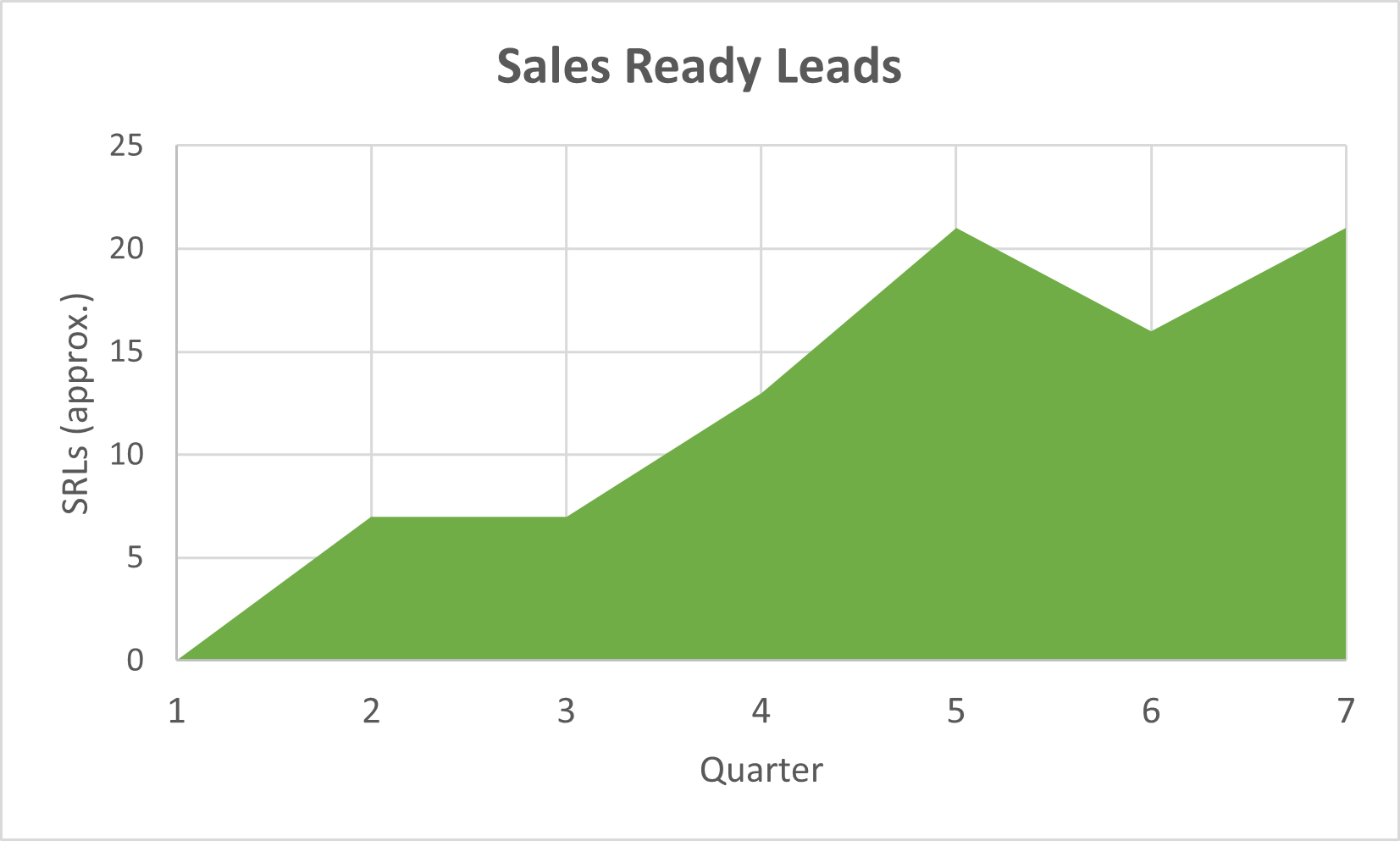
- Some companies are already seeing sales-ready leads as a referral source within their CRM.
- There’s still the potential for early-mover advantage.
- Google is embedding AI into regular search.
Experimenting ASAP give you a shot at figuring some things out before others in your space, instead of trying to play catch up later. Similar to SEO, there appears to be opportunity to create momentum by figuring out where to focus your energy while the landscape is still evolving.
Will it be as efficient as if you wait? In some ways no (e.g. you’ll take more wrong turns), in others, yes (e.g. benefiting from the snowball affect).
But like with SEO, your goal is to build a foundation. That takes time. It isn’t something you just flip a switch to turn on. This is going to be a multi-year endeavor.
How different is visibility in AI search from ranking in organic search (SEO)?
There are two primary marketing positions out there: those that think AI visibility is essentially like SEO with a few tweaks, and those that think it’s an entirely new world.
From my perspective, the most realistic answer lies between the two positions (maybe a touch closer to it being different than it being very similar): it’s more different than some people in the marketing community are espousing (i.e. it’s not almost the same as the way SEO has been done for the past several years), but it’s not as different as others are suggesting (i.e. it’s not an entirely new domain).
Here’s the way I’m thinking about it currently:
AI visibility is like moving from two-dimensional calculus, to four-dimensional calculus-based random processes. Similar foundational concepts, but significantly more complicated.
AI visibility appears something like stochastic, multi-dimensional SEO.
Some factors that make AI visibility significantly more complex than regular SEO:
- Fundamentally LLMs introduce randomness.
- LLM models are evolving dramatically and at a feverish pace (Google’s search algorithms evolve quickly, but not as dramatically).
- Search query vs conversational (prompt) length and nuance – when you type something into a search engine, you’re often searching with a ~handful of words. With AI, you’re providing contextual nuance in your conversation with the LLM, on the order of dozens to hundreds of words, and if you’re providing input files, much more than that.
- Matching vs generating – traditional search indexes and tries to match your search query with a best fit result. LLMs are so much more complicated, pulling from training data to predict the next token, grounding in search results and user-provided input files.
- Several different platforms to monitor. With SEO, you mainly were monitoring one platform (Google). In the LLM world. right now you likely want to monitor ~3-5 LLMs.
The reality in the near term is that most smaller businesses won’t have the ability to mirror this level of sophistication with their analysis or content creation efforts. You can’t afford the team of marketers needed to address these realities. Instead, small companies will be forced to focus by essentially projecting a 4D system down to 2D, which is still WAY better than not doing anything at all.
Eventually (maybe starting around ~2028?) things will likely settle a bit with LLM-based AI. As it stands, more software companies are developing AI visibility monitoring platforms at a price point that’s not offensive to small engineering companies.
So where should small engineering companies focus their efforts in the near term?
What small engineering companies can focus on to improve their AI visibility
- Establish a baseline – (1) what LLMs do your customers use most? (2) what do you currently rank well for in traditional search (Google, Bing)?, (3) what prompts do you care most about? and (4) are you being recommended in those prompts?
- Get your SEO feet under you – Many of the fundamentals of AI visibility are converging toward many of the fundamentals of good SEO. Are you performing solid SEO yet? Start there.
- Avoid “silver bullets” – More gaming is available currently for AI visibility than for SEO. I wouldn’t put much (or maybe any) effort here. Much of the low-level gaming should fade over the next couple years or so. Shy away from the silver bullets. They don’t last. An example of something to avoid in my opinion: fake self-published “top 10” style articles.
- Learn about RAG (Retrieval Augmented Generation). This will help you understand how LLMs may mention, recommend, or cite you without training data.
- Work harder on getting published in relevant, authoritative industry publications. LLMs generally like such 3rd party validation.
- Start monitoring your AI visibility – there are several AI visibility monitoring tools for this (caution flag on all of them until you understand better how they operate, how much confidence they should give you or not). There are also tools that you likely already have access to that can tell you some useful things, and then there’s your website server log data that can tell you fundamentally what’s visiting your site currently (both for training and live retrieval).
- Start gathering external reviews – the site matters for your niche and industry. Don’t just select generically. This is harder than you might think.
- Start answering the right questions, in a way that humans and LLMs prefer, on your website if you’re not already.
- Learn about schema as a potentially useful mechanism to convey information about your company to LLMs. The jury is still out on the utility of schema. My current take (as of mid-2026): treat them as experimental. The level of effort is relatively low. Try out a few of the most useful schema types.
-
Learn about term frequency occurrence – The idea here is for your brand to show up next to your most important niches in the right places on the web. There are better ways to do this, and worse ways. The worse ways fall into the category of gaming for me. The better ways often fall into the category of PR.
- Add nuance and context to your content – Essentially this means the long tail of SEO gets WAY longer.
- Elevate your interest in mentions, not just backlinks – Mentions are more important for AI visibility than for SEO.
- Learn about query fanout – Essentially, when LLMs start searching the web, they do so with a series of searches. Addressing those queries can help your visibility.
The landscape of LLMs – it’s no longer just about Google
First off, you’d better believe Google is going to do everything they can to maintain their dominance in search, whether traditional or AI-based. Having said that, Google is not the obvious winner at this point within the realm of LLMs.
And then, as if AI visibility wasn’t complicated enough with just a single LLM, there’s non-negligible variation in how to show up in one LLM vs another.
LLMs likely of interest for engineering services companies:
- ChatGPT
- Perplexity (Sonar)
- Claude
- Google / AI Overviews / Gemini
- Copilot
Being included in training data
I believe most companies will want their brand to be included in LLM training data.
Currently it appears that it can take several months to ~a year to be included within a model’s training data. This seems to be limited by the end-to-end process of:
- data collection,
- data filtering and pre-processing,
- model training,
- results validation,
- new model release.
The nuance here is that this doesn’t mean that you necessarily want all of your content to be included in training (that’s up for debate and the dust is far from settled on this. Check out Cloudflare’s attempt at doing something about this with a Content Signals Policy: https://blog.cloudflare.com/content-signals-policy/ ).
Being included in live web search grounding
Web search grounding is when an LLM pulls results from a search index (e.g. Google, Bing, etc.) and then synthesizes results into the LLM’s response.
Being included in an LLM’s web search grounding (sometimes generically referred to as RAG (Retrieval Augmented Generation)) is something that I believe all engineering companies will desire for essentially all of their public-facing content. Live web search generally takes place when:
- recent information is required that would be unlikely to exist in the model’s training data (or outdated in the training data), or
- the model doesn’t have enough detailed or trusted info in its model to respond to the prompt.
This reality puts renewed emphasis on the importance of showing up in traditional search engine search results (i.e. Google, Bing, etc.). This essentially means doing some aspects of traditional SEO well is still important.
Next Steps
AI visibility is a volatile and quickly evolving discipline. If you want to help making sense of the chaos, feel free to reach out for a chat.
In learning mode?
Check out these case studies:





Check out these articles:
- Lead-focused inbound marketing for civil engineering firms
- Inbound marketing for engineering companies
- Website Strategy – Lessons Learned from an Engineer
- Inbound marketing strategy for industrial engineering services companies – 23 niches explored
- Case Study – Brand name rank increase in search for a software development company
- Marketing for Small Engineering Firms
- Inbound marketing strategy for industrial engineering services companies
- Why you need a niche for your engineering company
- Creating a no-BS marketing strategy for engineering companies
