
What should engineering firms consider when choosing a marketing partner?
No-BS opinions from an engineer turned marketer
Last updated: January 26th, 2026
Yeah, that’s right, I’m an engineer… at least I used to be. Though I’ve been told many times: “once an engineer, always an engineer”. I suppose at some level that’s true. I certainly mostly still think like an engineer, for better, AND for worse 😊.
And now I’m an engineering marketing consultant.
If you’re paying attention, this might make you pause and say something like: “but wait David, if you’re a marketing consultant with an engineering background, doesn’t that mean you’re just going to tell me that I should work with you?”
You might think so, but no, I’m not. Whether or not you should work with a company like RocLogic depends on several factors.
Let’s bound the problem, shall we?
First, let’s focus on small services-focused engineering firms (i.e. those with less than ~100 employees).
When I sit back and think about what an engineering company should consider when selecting a marketing company to help them with their marketing, 4 primary factors bubble to the top:
- How much does the marketing company cost?
- Do I care whether the marketing company has former engineers on staff?
- Should I work with a consultant or an agency?
- What types of marketing are a fit for my business?
Bounded. Good. Now let’s get into it:
Pricing
Shortest answer: in 2026, based on some quick research and my own experience, common pricing in the US seems to fall anywhere between ~$3k/mo to ~$15k/mo. A lot of factors go into these prices.
How you can validate:
- Ask your favorite LLM or search engine to confirm for your scenario.
- Check marketing company websites. Any decent marketing agency or consulting company should be able to give you at least a ballpark estimate on their website (caution flag for those that don’t).
A word of caution: it can be very challenging to get apples to apples comparisons, and even when you’re comparing apples, you’ve got a lot of varieties to choose from. So what do you do with this reality? Start by figuring out what price point is sustainable for you, and then look for a marketing company within that ballpark. No point in shopping around for something outside your comfort zone.
Engineer or not
There are WAY more generalist marketing companies than those with former engineers that you can work with (my best educated guess: 90-95% generalists, 5-10% with an engineering background).
Is it important for you to work with a marketing person with an engineering background, or is a more general background good enough?
The primary factors to consider boil down to asking yourself 3 questions:
- Is what you do complicated enough that you’re going to struggle to explain it to non-engineering people?
- Do you sell your engineering services to technical people?
- Do you care if the person (or people) you’re working with thinks like an engineer (i.e. often more logical, analytical, and blunt by nature)?
If you answered “no” to all 3 of these questions, you can probably utilize generalists.
If you answered “yes” to 2 or 3 of these questions, you probably want someone with an engineering background.
If you answered “yes” to only 1 of these questions, I’d have to hear more details from you to have an opinion about which way to go.
Agency vs consultant
While there are certainly exceptions to this, in my experience, agencies tend to be more focused on doing marketing work for you (e.g. developing content for you, designing logos and graphics, creating brand messages), whereas consultants tend to be more focused on doing work with you (e.g. more collaborative, developing strategies with you, facilitating content creation).
There’s generally a lot that goes into either of these structures, and while they do overlap, there’s usually strong distinctions between the two.
Typical agency pros and cons
Agency pros:
- You get to see marketing assets (content, ads, website updates, etc) being created with less involvement from you (though generally non-zero still)
- They often have people that specialize in different aspects of marketing (e.g. graphic design, website infrastructure, video production, social media, SEO, writing)
- If one person leaves the company, you’ll still get support from the same company.
Agency cons:
- Billable hour pressures. All the things that go with focusing on billable hours. Even if they bill you a flat monthly retainer fee, they’re probably tracking closely internally because they’re still paying that person’s salary regardless of how time efficient they are. Depending on the structure of your arrangement, sometimes it may feel like they’re more focused on turning the crank than producing quality content.
- There’s a decent chance that a junior or mid-level marketing person is going to be involved. They may not have the world view needed to really “get” what they’re trying to do for you.
- More likely to lock you into their systems (e.g. a custom CMS, the way they set up your tools).
- Continuity of who you work with over months and years is less likely. Some change jobs, others get moved onto other projects.
Typical consultant pros and cons
Consultant pros:
- Often more “white glove” style service. Can be more flexibility with how you work together. While they may have their core set of tools for collaboration, they’re likely to be open to meeting on an ad hoc basis, or willing to work with you to flex their content creation process.
- Higher likelihood of continuity with the same person. You’re more likely to know what you’re going to get because you often have a single POC.
- Lock-in is less likely. Consultants (certainly RocLogic) are more likely to help you set up your tools by showing you the main steps, letting you control them, and giving the consultant the access that they feel they need.
Consultant cons:
- Consultants can’t be all things to all people. In order to be good at what they do, consultants need to narrow down to some subset of the possibilities. This includes narrowing by industry (e.g. engineering), as well as marketing methods (e.g. inbound, SEO, paid search, social media, trade shows, email marketing, …). If they don’t already specialize in a domain that’s of interest to you, they may be willing to ramp up some on the fly, but they’re not going to become an expert in it overnight.
- They’ll want you to bear some of the load. What does that mean? An example: if you’re working together to create content, while they may facilitate the overall process from beginning to end, they’re going to expect you to provide a SME for the meat of the content.
Selecting marketing methods that fit your company
Let’s start with a foundational aspect of marketing: you’re going to need to create content. Content is foundational for most types of marketing. It’s critical for AI-based search, account-based engagement, SEO, websites, LinkedIn, Google Ads, …
With that out of the way, you’ve got 2 primary factors to consider to help make a decision about what marketing methods you focus on:
- Your company culture
- The niches you play in
How your company culture impacts marketing method selection
How extroverted vs introverted is your company culture?
Would you prefer to be the center of attention? Are you super high energy and impatient? Do you like the idea of getting in front of strangers and convincing them why they should hire you? If so, you may prefer more outbound-focused methods:
- social media,
- account-based engagement,
- tradeshows,
- cold calling.
Alternatively, do you prefer to strategically, patiently, and methodically build your credibility, positioning your company to show up when someone has a need that you can help with? If so, you may prefer more inbound-focused methods:
- SEO,
- AI search visibility,
- Google Ads.
How your niches impact marketing method selection
Let’s define “niche”: a niche is a way that the market views a problem that it has (see why you need a niche for more detail).
Niches live within segments. Many engineering companies operate in segments such as:
- structural engineering,
- product design,
- industrial engineering,
- civil engineering, or
- software engineering.
Being able to find niches implies inbound is worth considering. However, just because there are defined niches within your segment, doesn’t mean inbound is a slam dunk. Some niches are significantly more competitive than others. Inbound marketing may be more or less attractive based on several aspects of your company, but it’s worth considering.
In the unlikely scenario that your engineering company doesn’t contain at least one niche, or if the niche is very ill-defined, there are likely one of two reasons for this:
- The problem isn’t super painful to potential customers (so they’re unlikely to spend much $ to fix the problem), or
- The problem is so new that the market isn’t looking for a solution yet.
If the problem isn’t very painful, you’ve got a business model problem on your hand. This is a huge caution flag. Do not pass go. Do not collect $200.
If the problem is so new that the market isn’t looking for a solution yet, this is still a caution flag, but more within the realm of you needing to acknowledge that you’re trying to take a new service to market. This can be great because presumably the competition is lower than established niches, but also very risky because you need to build more awareness. For this scenario, you’ll likely need an outbound-focused strategy.
Next Steps
Want to talk through any of this?
Feel free to reach out for a chat.
In learning mode?
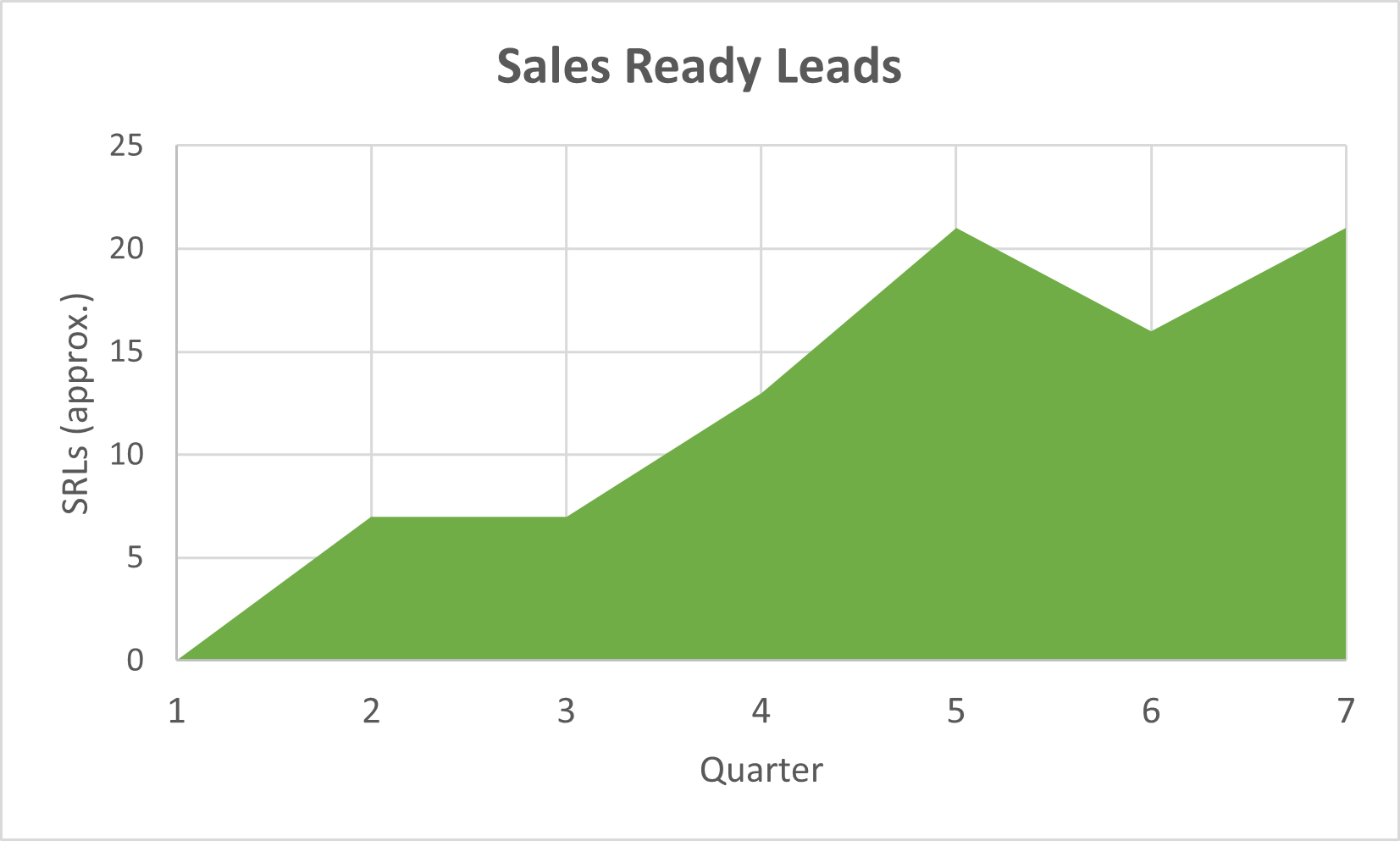
Check out these case studies:



Check out these articles:
- Marketing Strategy for Structural Engineering Companies – 33 niches explored
- AI visibility for engineering companies – RocLogic Marketing
- Inbound marketing strategy for industrial engineering services companies – 23 niches explored
- Marketing for Small Engineering Firms
- Lead-focused inbound marketing for civil engineering firms
- Website Strategy – Lessons Learned from an Engineer
- Lead generation for engineering – insights from an engineer
- Advertising for engineering firms (especially Google Ads)
- Good and bad marketing ideas for engineering companies
- Niche selection obstacles – poll results and thoughts
- Marketing plans for engineering companies – from an engineer
- Creating a no-BS marketing strategy for engineering companies
- What should engineering firms consider when choosing a marketing partner?
